I recommend reading The Right to Oblivion: Privacy and the Good Life by Lowry Pressly. While Pressly articulates the philosophical framework, my perspective comes from having lived through the transition from an era where disappearing into oblivion was the default state, to today's world where it requires conscious effort.
Into the Dark Wood: The Right to Be Unknown
2026-02-01
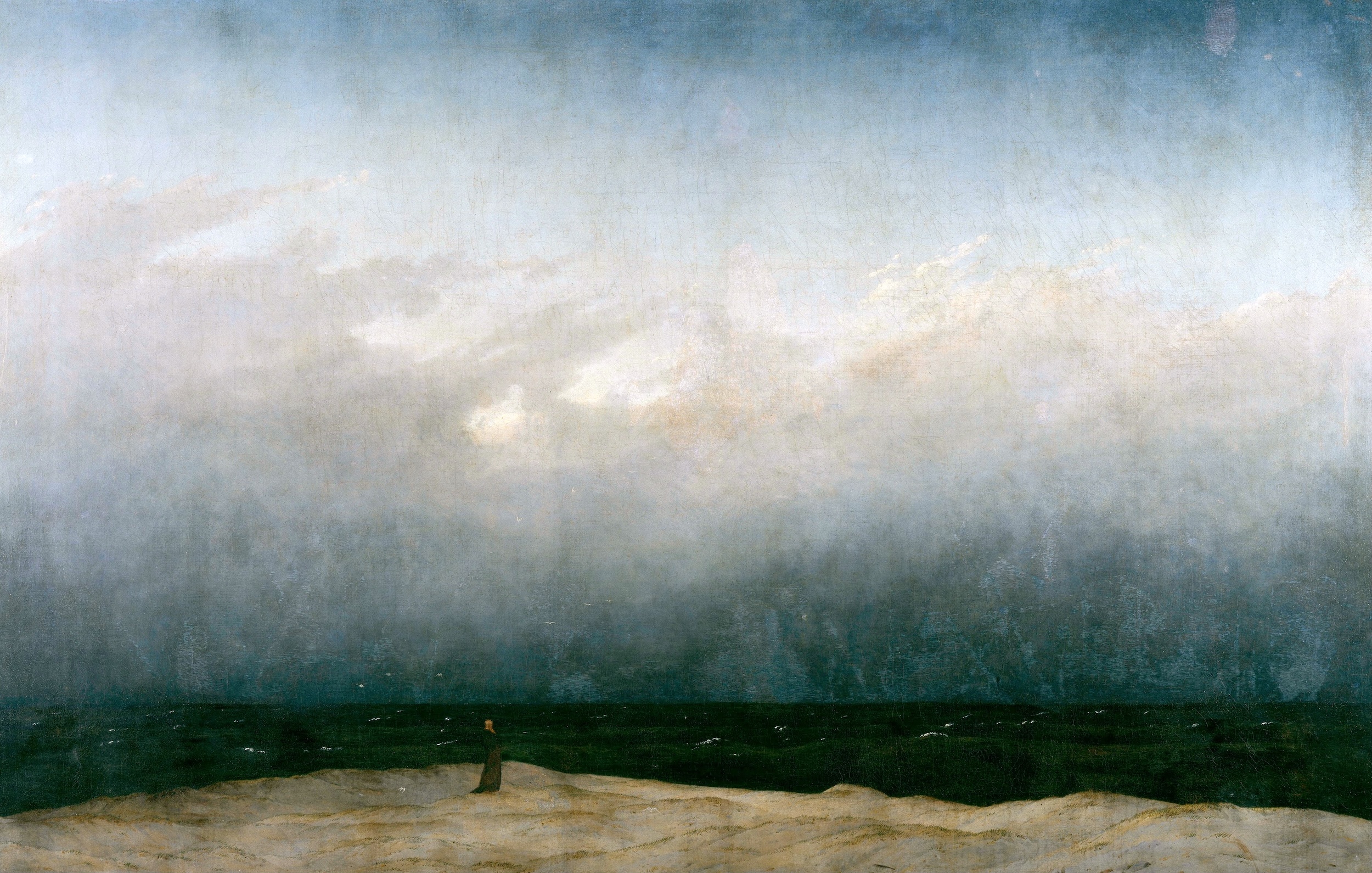 Caspar David Friedrich - "Monk by the Sea" (1808-1810)
You know that feeling when you step outside and forget your phone? For some, it causes a panic attack. It's a visceral reaction to constantly having the feeling of something in your pocket for the last 20 years that gives you access to the world beyond what you can see. We've all experienced phantom buzzing in our pocket when nothing is there. It is a psychological experience that always amuses me when I realize it's happening, like déjà vu.
The anxiety we feel without our phones isn't always irrational, the intensity of the reaction often is.
There are a thousand valid reasons why someone must have a phone on them at all times. I won't cover all the corner cases here because I'm writing about a phenomenon, an experience, that's more interesting to me than the involuntary existential dread that one feels when they've left their phone at home.
Oblivion.
For all of human existence, when someone walked outside, took a transatlantic voyage on a ship, or simply walked into a forest away from other people, all of those souls disappeared into oblivion from someone's perspective. No new information was being generated for anyone who wasn't around to observe directly or indirectly. When someone said "I'm sailing for Europe on a vacation, I'll be back in two months, I'll send you a postcard," you simply accepted the fact they were about to enter into oblivion until they decided to generate some information in the form of a postcard that said "Greetings from Sicily." By the time you received the postcard, that information was stale. The speed of information, the distance it can travel, and how current it is all matter. Today we have compressed these dramatically; we receive signals from the Voyager probes in interstellar space within 46 hours.
Some do this today in other forms, camping in the woods, sailing across oceans, though even these folks will occasionally report their position, use satellite tracking and of course radio communications for safety reasons, all of which produce information intended to be observed by others. I had a friend hike remote trails in New Zealand and they took a satellite GPS tracker to occasionally mark their location. I was relieved to see their position update every other day with progress. That one beacon, a set of numbers, longitude and latitude, was the only information being generated by this individual from my perspective.
I grew up in the 80s and 90s in Providence, RI. The computer sat in a single spot, the internet was accessible only from fixed terminals. Ad tech surveillance wasn't an established trillion dollar industry yet. There was no cellphone for me to take with me when I went across the street to my friend's house; my parents didn't know where I was the moment I was out of sight. They could safely assume I was somewhere nearby. If they called across the street, and I wasn't immediately around, they didn't worry. I was out in the neighborhood somewhere. They could make safe assumptions of where I'd be at any given time considering my constraints of a bike and the need to eat food at some point.
When I stepped outside, from the perspective of my parents I stepped into oblivion. I stopped generating information and became a black hole. Their only assurance of my existence was rooted in my predictability as a ten year old, and they were not wrong.
Today, we generate more information faster than ever. It's no longer my parents keeping tabs on where I am; it's the ad tech surveillance industry, data brokers, ubiquitous surveillance cameras with unlimited storage that keep tabs on me for dozens of organizations, each with a vested interest in total situational awareness. The corporations collecting this data are not always state actors, though that has changed in the last few years. We know that many corporate actors cooperate with governments, and recent examples have shown how mass collection of data, supposedly for advertising, by corporate proxies is being used as a way to circumvent legal barriers to collection.
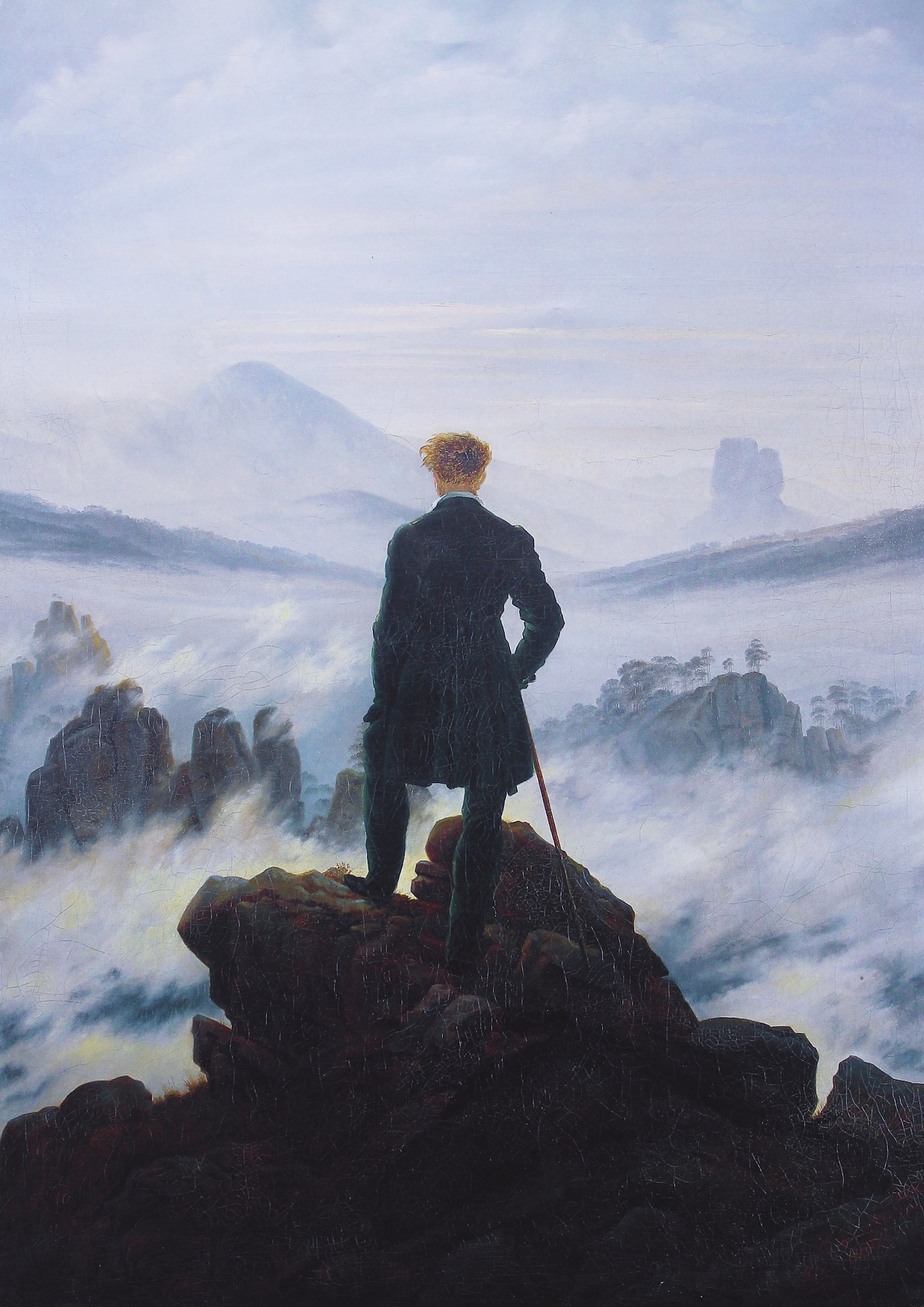 Caspar David Friedrich - "Wanderer Above the Sea of Fog" (1818)
I have started stepping out for walks, to get a coffee or run small errands without my phone. I make sure someone knows that I'm stepping away for a bit, but other than that, from the perspective of my friends and family I've stepped into oblivion. I constantly fear that the day I leave without a phone will be the day I'll have to call emergency services, or that I'll miss that very important phone call. The truth is none of these things happen even on a day when I have my phone, and when I have missed important phone calls, they were never so important I had to act on them within hours of receiving them.
I cannot avoid being recorded constantly in surveillance footage; my local café has many cameras trained on the staff and customer areas. I can, however, attempt to disappear as much as possible given the constraints of merely existing in the modern world. No location tracking, not being reachable by anyone, not being able to compulsively check any website, receive push notifications of the latest horrible thing happening in the world. I am cutting myself off from as many outside influences as I can that may try to grab my attention. My only way to gather external information is to observe it with my eyes, maybe see a news story in passing on a television, perhaps overhearing a conversation about some recent event. Walking the streets of Cambridge without a smartphone, with nothing to do but look at blue jays and squirrels has replaced buzzing notifications in my pocket.
One should run ad blockers, avoid abusive relationships with Silicon Valley tech monopolies like Amazon, stop feeding corporate social media algorithms and break the addiction. The attention economy is real; they rent your eyeballs out to the highest bidder so they can send you eerily accurate targeted ads. Whether driven by paranoia, mental health, boundary-setting, or anti-capitalist tendencies, attempting to step into oblivion in today’s world is difficult. Each person has their own tolerance for how much exposure to society they are willing to endure.
Some people think it is futile to try and exercise their privacy rights. They'll say "I have nothing to hide, I don't care if Instagram knows I buy a certain brand of shirts" but of course this argument falls apart when challenged. If anyone ever says this to you, ask them to unlock their phone and hand it to you so you can scroll through their photo album; I bet you can predict their response. Of course everyone has something to hide, and the fact that they have something to hide is not necessarily nefarious; privacy is a human right. If anyone thinks you are wasting your time trying to restrict, even in the slightest, your exposure to the ad surveillance industrial complex, tell them you don't just capitulate the moment a trillion dollar company offers you a 30% discount coupon on some junk you don't need. I've had people argue with me over the morality of running an ad blocker; I ask those people what moral grounds the ad networks, data brokers and companies monetizing my information have to even collect that information given how much we know they abuse that data. I decide who gets to execute code on my computer, and I have no obligation to allow Google, Amazon or Facebook to execute their JavaScript in my browser; they may try to punish me for exercising this right, but for almost 25 years now, they've failed.
I encourage you to step out into oblivion, take control of the information you create, exercise your autonomy to generate information without any context attached. You have many levers to pull, knobs to adjust and they are at your disposal. Do not leave them in the default positions; you can adjust them to your liking at any given moment. Some people don't even realize they have the levers available to them; they think there are serious repercussions for pulling some of them. You'll only find out by experimenting and figuring out the balance that works for you.
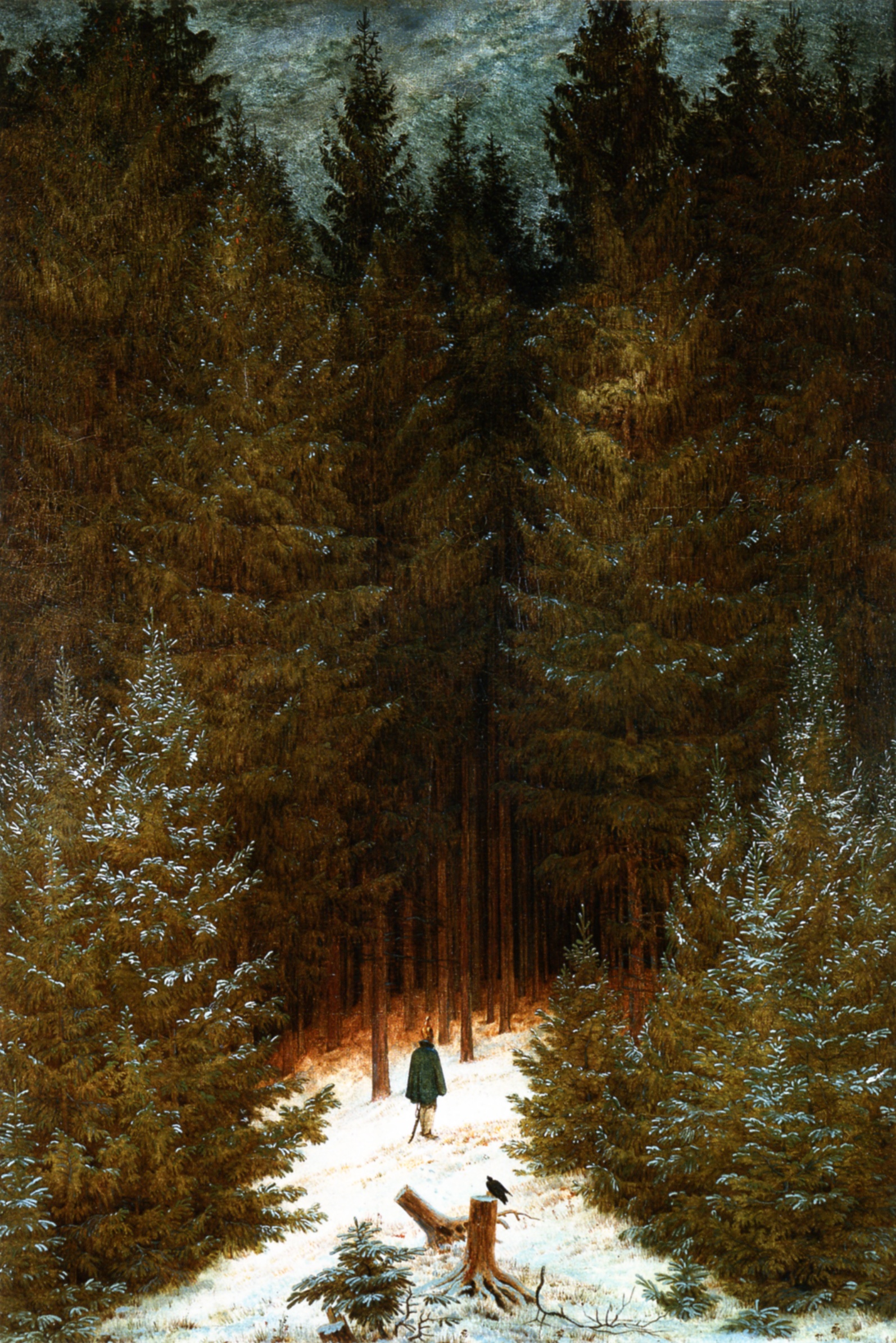 Caspar David Friedrich - "The Chasseur in the Forest" (1814)
It is not futile to exercise your right to privacy or to disappear into oblivion; it is something your ancestors did for thousands of years, mostly without even realizing it. Constantly generating information to the degree we do today, directly or indirectly, is a new state of being for humans that only emerged recently.
You have the right to be unknown, to disappear into oblivion.